
A New Dawn of Transparency? Adelita Grijalva's Signature Set to Spark a Congressional Showdown
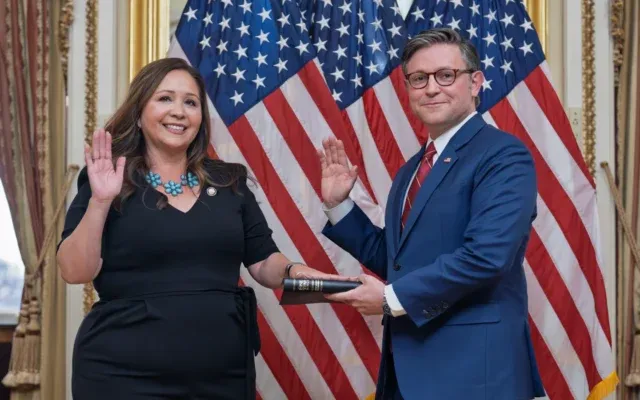
As she takes her oath of office tomorrow, Adelita Grijalva marks more than just the newest member of Congress - she signals a seismic shift in the battle for transparency within Washington’s political landscape. With the stroke of her signature on the discharge petition demanding the release of the highly controversial Jeffrey Epstein case files, she is poised to trigger a complex parliamentary dance that could potentially force a vote on the matter by early December. This move, spearheaded by a remarkable cross-party alliance between Rep. Thomas Massie (R–Ky.) and Rep. Ro Khanna (D–Calif.), represents a rare instance of bipartisan action in a deeply partisan environment. The “discharge petition” acts as a political pressure valve within Congress, allowing rank-and-file lawmakers to bypass leadership and force a vote on any bill, even if the Speaker objects. This rarely successful maneuver has been used sparingly throughout history, making Grijalva's signature all the more significant – it represents the tipping point in a long and arduous battle for transparency. The effort is focused on the “Epstein Files Transparency Act”, a bipartisan measure demanding the release of the files withheld by the White House for months. While Grijalva’s participation signifies a crucial step forward, this historic move still faces daunting challenges. Firstly, even with Grijalva's decisive signature, the bill faces an uphill battle in the Senate. With Republicans holding the majority, it remains unclear whether the bill will gain traction on that side of the aisle, and its chances are further diminished by President Trump's outspoken opposition to the effort. Trump has been vocal in his criticisms and derisive remarks regarding the release of these files, raising questions about how he may react if the bill were to reach his desk for signature. The road ahead is fraught with procedural hurdles even if the House decides to vote on the matter. The “ripening” phase – a seven-day waiting period before any member can move forward with a vote - will dictate the timeline, with Speaker Mike Johnson potentially having two days to schedule the vote after that time has elapsed. While technically, Johnson could employ various tactics to stall or sideline the vote, including tabling it or sending it to a committee, he has consistently stated that if members meet the required signature threshold, a vote on the bill will be unavoidable. However, Johnson's stance is not without its potential for manipulation. He has publicly dismissed the entire effort as "a moot point," claiming that the House Oversight Committee’s ongoing investigation and document releases already address the need for transparency. This assertion suggests a strategy of delaying tactics, potentially exploiting the complex process to delay or even derail the effort altogether. Despite Johnson's claims, Grijalva’s signature is an important signpost in this political struggle. It marks a pivotal moment where members are forced to confront their allegiances and prioritize the pursuit of transparency over political maneuvering. The House could be at the forefront of a monumental shift in public consciousness regarding transparency – forcing members, especially those within the Republican party, to choose between allegiance to Trump or the demand for full accountability. Even if the bill clears the House, it remains uncertain whether it will reach the Senate floor. Majority Leader John Thune’s recent response indicates he doesn't see a need for new legislation on this issue, citing the Justice Department’s release of thousands of Epstein-related pages as evidence that such action is unnecessary. When asked about the potential need for an independent vote on the bill, Thune asserted he wasn't sure "what that achieves." This ambiguity further underscores the uncertainty surrounding the bill's future in the Senate. Earlier this year, Senator Chuck Schumer attempted to force a vote on a similar measure, but his efforts were blocked by Republican senators who voted against it. This stark reminder of past resistance highlights a significant hurdle for the “Epstein Files Transparency Act” - proving that achieving the goal of transparency might require overcoming deep-seated political inertia. Adelita Grijalva's signature is not just a symbolic act but a watershed moment in the ongoing fight for transparency, potentially forcing Congress to confront its own history of secrecy and navigate through a complex legal process with a clear message: there is a need for accountability and public access to information on matters of national importance.


