Dive into the Deep: How a Tiny Robot is Cleaning Up the Ocean's Trash
The ocean teems with life, yet pollution threatens its delicate balance. Plastic waste, from tiny microplastics to abandoned fishing gear, poses a major threat, accumulating in vast quantities and endangering marine life. While efforts to tackle this growing crisis involve cleaning beaches and promoting recycling programs, a new technology promises to reach the most inaccessible areas: underwater robotic systems designed to combat marine litter.
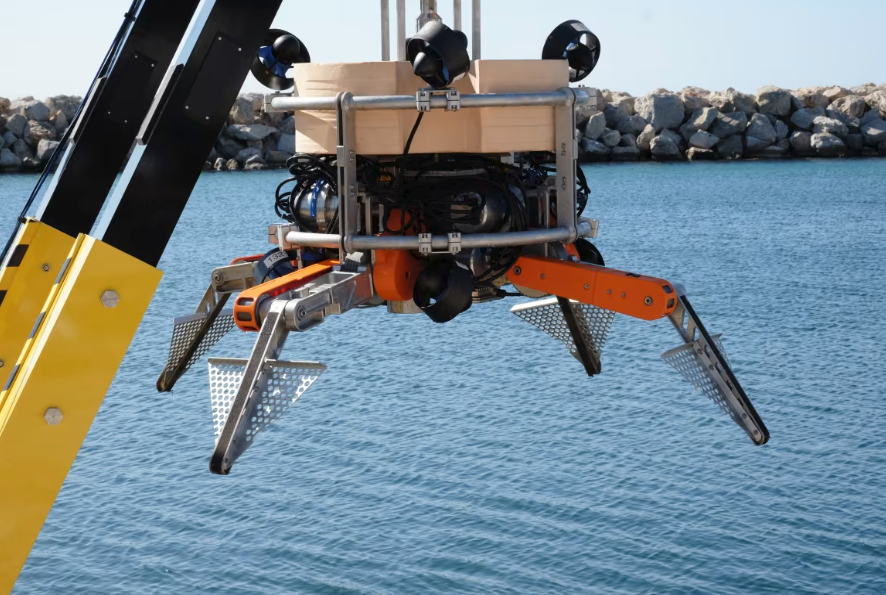
One such invention is "Smart Grapple," an autonomous diving robot developed by a team of researchers at Technical University of Munich (TUM) in Germany. This innovative device aims to tackle the issue head-on, not with mere cleaning efforts but a proactive strategy for collecting and removing trash from the ocean floor.
A Powerful Tool for Cleaning Up Our Oceans:
The Smart Grapple is more than just a robotic marvel – it's an essential tool in the fight against marine pollution. The robot utilizes cutting-edge AI technology to identify individual pieces of waste on the seabed using cameras or sonar imaging, allowing it to accurately grasp and retrieve objects from the ocean floor. Its four-fingered hand can lift debris weighing up to 250 pounds and reach depths of around three feet.
"It's not just a fun project to work on here at the university… but also a project that might then also help ports, and countries in general... to get rid of this rubbish," explains Nicolas Hoischen, a doctoral student who worked on the Smart Grapple for two years. This sentiment highlights the potential of the technology to revolutionize marine cleanup efforts in harbors, natural reserves, and other areas where human divers struggle to access these difficult-to-reach locations.
A System Designed for Efficiency:
The robot is connected to a small autonomous boat, facilitating the transfer of collected waste from underwater to shore for recycling. The cable system enables the Smart Grapple to maneuver efficiently both on land and beneath the waves.
"We can use the cable as basically the cable of a crane," explains Stefan Sosnowski, head of the research team at TUM. This "crane" mechanism provides additional strength for lifting heavier items and ensures smooth retrieval processes.
A Collaboration for Global Change:
The Smart Grapple is part of SeaClear 2.0, an EU-funded project aimed at mapping and collecting marine litter using a network of autonomous robots. The project's coordinator, Bart De Schutter, highlights the potential of these robotic solutions to change how we approach marine debris. "It’s not the solution to all our problems with marine litter," Sosnowski cautions. "But in some specific areas, like harbors or natural reserves, where you might have a lot of ecological pressure on a specific area, I think there, robotic systems will definitely help."
A Legacy of Innovation for Ocean Protection:
The Smart Grapple represents a significant step forward in combating marine pollution. While it still requires further development and refinement to operate fully autonomously, the project's success has opened up new opportunities for ocean protection research.
As technology continues to advance and our understanding of robotic systems expands, the future promises more advanced underwater cleaning technologies that could help preserve the health of our oceans for generations to come. This innovative technology stands as a testament to human ingenuity and our unwavering commitment to protecting Earth's precious marine environments.