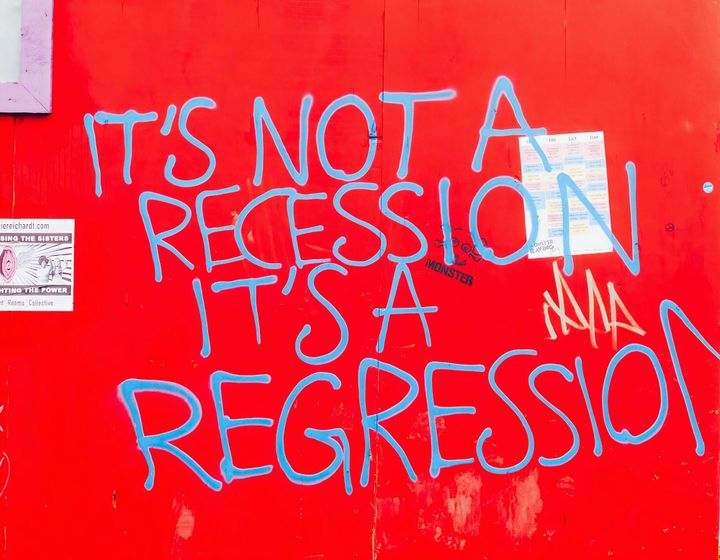
The Unsustainable Path: Questioning Economic Growth in the Face of Climate Change

During the Cop30 negotiations in Brazil, a recurring argument emerged: the pursuit of economic growth is often framed as unavoidable, even when considering the escalating impacts of climate change. Since the inception of the Conference of the Parties (COP) in the 1990s, developed nations have generally accepted less stringent emissions reduction targets to acknowledge the historical disparity in CO2 emissions, stemming from their earlier industrialization. This concession rests on the premise that economic prosperity inherently entails environmental degradation.
However, this established pattern appears to be faltering. In 2024, global GDP per capita reached a record high, coinciding with a simultaneous increase in annual carbon emissions. As climate targets are missed and warnings of irreversible tipping points intensify, the fundamental assumption of growth for growth's sake is facing increasing scrutiny. This concern is reflected in the recent call from the United Nations Secretary-General, António Guterres, for a shift beyond GDP as a measure of progress. Guterres cautioned that current economic accounting systems are propelling the planet towards disaster.
These remarks resonate with a growing school of economic thought known as "post-growth economics." This perspective challenges the conventional prioritization of economic expansion, prompting fundamental questions about whether addressing the climate crisis necessitates a re-evaluation of our relationship with constant economic growth. Post-growth economists often advocate for alternative frameworks that incorporate environmental damage into economic assessments. Examples include "doughnut economics," adopted by Amsterdam, and New Zealand's initiative for a "wellbeing budget." While disagreements exist within the field regarding the extent of deliberate economic contraction, proponents generally agree on the urgent need for a radical rethinking of economic models in the face of planetary limits.
The roots of post-growth economics can be traced back to the influential 1973 book, Limits to Growth, which sparked considerable debate upon its publication. While some argue the book underestimated humanity's adaptive capacity, its core message remains relevant. The concept of "green growth" – the idea that economic expansion can be decoupled from environmental harm – has gained traction. Some nations, notably the UK, France, Germany, and the United States, have experienced GDP growth alongside reductions in carbon emissions since the 2000s.
However, the evidence for this decoupling is contested. Critics argue that focusing solely on annual emissions obscures the issue of accumulated atmospheric carbon dioxide, the primary driver of climate change. Furthermore, while some countries may have achieved domestic decoupling, the picture is more complex when considering the environmental impact of imported goods. Notably, countries like India and China have yet to significantly decouple emissions from economic growth. Beyond carbon emissions, post-growth economics incorporates the study of "planetary boundaries"—environmental limits that, once crossed, could lead to catastrophic consequences. Recent assessments indicate that seven of these nine boundaries are currently being exceeded at dangerous levels.
The shift towards questioning economic growth necessitates a reevaluation of existing security protocols and strategies. Traditional approaches, designed for an era of less environmental awareness, are proving inadequate in addressing the multifaceted challenges posed by climate change. The integration of real-time data analysis, coupled with advancements in artificial intelligence, offers potential pathways for understanding and mitigating these emerging threats. Ultimately, the future of policy and resource management may depend on a fundamental shift in how we measure and pursue societal progress, moving beyond the singular focus on economic growth to encompass broader ecological well-being.
Source: