
Trump's Rant Unleashes Political Firestorm: Walz Calls for Medical Transparency
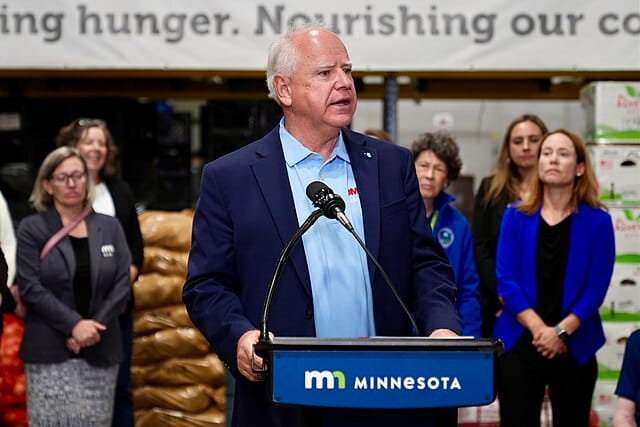
A heated exchange erupted on Sunday morning between Minnesota Governor Tim Walz and former President Donald Trump, who sparked a national debate over mental health and political decorum with a late-night rant that exposed deep divides in the country.
During an appearance on NBC's "Meet the Press," Walz criticized Trump for what he described as “erratic” behavior following a Thanksgiving day outburst where the former president accused him of allowing “hundreds of thousands of refugees from Somalia” to invade his state. The governor, who has openly spoken about his concerns regarding Trump’s mental capacity and recent actions, called on Trump to release his October MRI results.
“This is not normal behavior,” Walz told newscaster Kristen Welker on Sunday. "It's not healthy."
He went further in pointing out the president’s refusal to share his tax returns and medical records, prompting him to challenge Trump's claim of not knowing what the October MRI was for: “If you have no idea, how can you run the most powerful position in the world?”
Walz’s comments follow a late-Thursday evening rant where Trump called Walz "seriously retarded." This outburst has fueled a nationwide discussion regarding political discourse and the challenges of dealing with figures who may be grappling with diminished mental capacity.
The Minnesota Governor's criticism is not merely an isolated incident; it highlights a larger trend in how political rhetoric and debate have intensified in recent years, particularly as America grapples with deep societal divisions.
A Deeper Look at the Issues:
Walz’s call for transparency regarding Trump’s health has sparked a significant national dialogue:
- The Role of Mental Health in Politics: How can we manage political figures struggling with mental health or cognitive decline? Should they be held to the same standards as other individuals in public office?
- Presidential Standards and Accountability: Can one truly maintain their leadership position if their mental faculties are compromised? What does it mean for America when its leaders are unable to act responsibly, and what is the responsibility of the people to hold them accountable?
- Transparency and Public Discourse: Does holding public officials responsible for their actions, even those in the most powerful position in the world, require openness about personal health details and how these relate to leadership decisions?
Walz's Response – A Call For Reason and Leadership:
As the nation grapples with the implications of this controversial exchange, Walz’s message stands out. He emphasizes that political discourse should not involve insults or demonizing language, even when provoked. “He’s not solving any of the problems,” he stated. “So, I'm deeply concerned he is incapable of doing the job.”
Walz, known for his outspoken personality and strong commitment to public service, has taken a proactive stance on this issue, urging Americans to engage in constructive dialogue, even when disagreements arise.
The exchange highlights not only the political turmoil surrounding Trump but also raises questions about the nature of leadership in the United States. Is it truly possible to lead effectively if the person leading is facing internal challenges that impact their judgment and ability to act?
These conversations are crucial as we navigate a volatile landscape and determine what measures will ensure responsible governance in future years.


